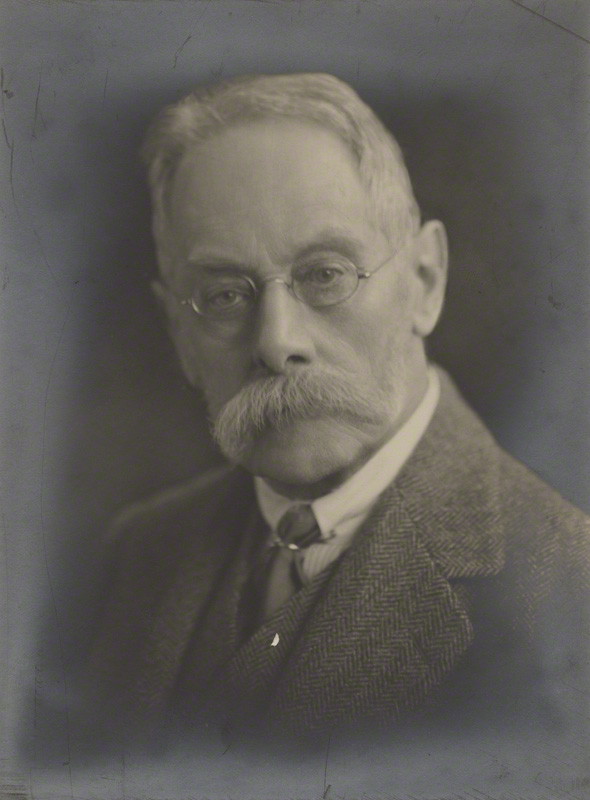
 Sir Frederick Pollock, 3rd Baronet (December 10, 1845 – January 18, 1937), was a preeminent English jurist and legal scholar whose work significantly modernized the study of
English common law.
Sir Frederick Pollock, 3rd Baronet (December 10, 1845 – January 18, 1937), was a preeminent English jurist and legal scholar whose work significantly modernized the study of
English common law.Queer Places:
Eton College, Windsor SL4 6DW, United Kingdom
University of Cambridge, 4 Mill Ln, Cambridge CB2 1RZ
University of Oxford, Oxford, Oxfordshire OX1 3PA
Golders Green Crematorium, 62 Hoop Ln, London NW11 7NL, United Kingdom
Sir Frederick Pollock, 3rd Baronet (December 10, 1845 – January 18, 1937), was a preeminent English jurist and legal scholar whose work significantly modernized the study of
English common law.
Born in London into a distinguished legal family—his father was Sir William Frederick Pollock, 2nd Baronet, and his grandfather was the Lord Chief Baron of the Exchequer—Pollock was steeped in the law from a young age.
He was a King's Scholar at Eton College before attending Trinity College, Cambridge. At Cambridge, he excelled in classics and was elected a Fellow of Trinity in 1868.
Admitted to the Bar in 1871, Pollock became one of the leading legal minds of his era. He served as the Corpus Professor of Jurisprudence at the University of Oxford from 1883 to 1903 and held the position of Professor of Common Law at the Inns of Court.
He is perhaps best known for his collaborative masterwork, The History of English Law before the Time of Edward I (1895), co-authored with F. W. Maitland. He also authored foundational treatises such as The Principles of Contract and The Law of Torts, which shifted legal education toward an emphasis on underlying principles rather than mere case application.
Pollock was the editor-in-chief of the Law Reports for forty years (1895–1935) and the founding editor of the Law Quarterly Review. He was also widely recognized for his lifelong, intellectually rigorous correspondence with U.S. Supreme Court Justice Oliver Wendell Holmes Jr.
Sir Frederick Pollock was a member of the Cambridge Apostles (formally the Cambridge Conversazione Society), an elite and secretive intellectual society based at the University of Cambridge.
His membership in the society was consistent with his time at Trinity College, where the group traditionally recruited its members from among the most brilliant undergraduates and fellows. The Apostles provided a forum for intense philosophical, political, and literary debate, which likely nurtured the "humanistic outlook and culture" often cited by his contemporaries as the hallmark of his intellectual life.
References:
Support this project
This website is a passion project researched, developed, and funded entirely by me. If you find the content valuable and would like to help support the ongoing research and hosting costs, any contribution is deeply appreciated.
Thank you for keeping this independent resource alive!
My books on Amazon: Elisa Rolle's books